Are you planning to base your company's revenue on a single product? You may think the answer to this question is too obvious, because no company has a single business unit. In fact, it's very good to have several products. The problem is that sometimes there are too many that are not always profitable. There is a very practical tool, the McKinsey matrix that can be developed for this purpose.
What is the McKinsey Matrix (McKinsey Model, General Electric Matrix)?
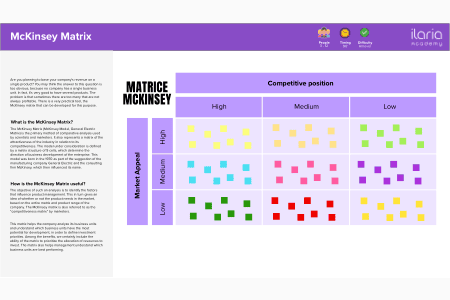
The McKinsey Matrix (McKinsey Model, General Electric Matrix) is the primary method of comparative analysis used by scientists and marketers. It also represents a matrix of the attractiveness of the industry in relation to its competitiveness. The model under consideration is defined by a matrix structure of 9 cells, which determine the direction of business development of the enterprise. This model was born in the 1970 as part of the suggestion of the manufacturing company General Electric and the consulting firm McKinsey, which then influenced its name.
How is the McKinsey Matrix useful?
The objective of such an analysis is to identify the factors that influence product management. This in turn gives an idea of whether or not the product needs in the market, based on the entire matrix and product range of the company. The McKinsey matrix is also referred to as the “competitiveness matrix” by marketers.
This matrix helps the company analyze its business units and understand which business units have the most potential for development, in order to define investment priorities. Among the benefits, we certainly include the ability of the matrix to prioritize the allocation of resources to invest. The matrix also helps management understand which business units are best performing.
Finally, the McKinsey matrix is much more complete than the BCG matrix. Indeed, it is much more thorough and takes into account a series of factors that the BCG matrix does not calculate.
When to use McKinsey's matrix?
Two events always occur simultaneously in the business world:
Numerous initiatives to invest on
Very few resources to be allocated to investment
In this case, the problem of the company becomes that of having to prioritize projects to be developed, products to launch, machines to buy, etc.
Investment decisions concern all departments of the company. Marketing would like to have more resources for communication activities. The plant would like to have some of these resources to modernize production machinery.
For a company that manufactures unique products, this problem is felt a lot, but imagine what could happen in companies like Nestlé that produce goods also very different from each other. From milk drinks for infants to dietary supplements, etc.
Everyone is fighting to get the means to move things forward. Products or business units differ in what they do, in their performance or in their future prospects. Therefore, it is very difficult to decide which products the company should invest in. Under these conditions, an analysis tool such as the McKinsey matrix is required.
Our assistant helps you pick the right course, funding options and level of support.
How we train our students
A teaching approach designed to make you job-ready quickly: live courses, personalized support, online resources, AI, and mobile apps to accelerate your progress.
Live courses on Microsoft Teams
Attend interactive live sessions with instructors and ask questions to keep progressing. Missed a session? A replay will be available so you don't miss anything.
Group and 1:1 coaching
Benefit from small-group coaching sessions and 1:1 meetings to remove roadblocks, structure your plan, and stay on track.
Hands-on, real-world projects
Work on real digital use cases—websites, marketing campaigns, entrepreneurial projects—to build a portfolio and gain real experience.
AI & online resources
Access structured resources (materials, replays, practical guides) and learn to use AI as a tool to save time and level up your skills.
Learning mobile apps
Make progress anywhere, anytime, with our mobile apps dedicated to each program (progress tracking, practice, reminders, supplementary content).
Exam and internship preparation
Prepare for your exams with mock exams, detailed feedback, and support toward an internship or a freelance project to validate your skills.
You want to change careers and move into the digital field, even without a technical background. We support you step by step to learn the fundamentals, structure your plan, and target your first role.
Working professionals
You are already employed and want to advance your career, secure your position, or prepare a transition to a more digital role. Learn at your own pace without interrupting your work.
Young people and students
You are in initial training or have just graduated, and you want to gain practical, job-ready skills to boost your employability in the digital sector.
You live abroad and want to follow a recognized distance-learning program, with the option to take your exams remotely or at one of our campuses depending on your situation.
This website uses cookies to ensure you get the best experience on our website.
OUR ONLINE AND IN-PERSON TRAINING PROGRAMSWe offer a variety of courses designed to prepare learners for the professional challenges of tomorrow. Whether your interest is in full stack web development, digital marketing, communication or collaborative management, we have a program that will meet your expectations. Our mission is to provide high quality, flexible and accessible education, in order to enable everyone to develop their skills and achieve their professional goals. In a constantly changing world, continuing education is more than ever an imperative for anyone who wants to maintain their competitiveness on the job market. Whether you are a professional looking to strengthen your skills or a beginner looking to start a new career, our programs are designed to provide you with the tools and knowledge you need to succeed.FULL STACK WEB DEVELOPMENTOur Full Stack Web Development program aims to train versatile developers who can manage all aspects of a web project. This comprehensive and practical course is suitable for both beginners and professionals who want to deepen their technical skills. Full stack web development is an increasingly sought after skill, as it makes it possible to cover the entire process of creating a web application, from the user interface to database management.OBJECTIVES OF THE PROGRAM- Master front-end and back-end technologies. You will learn how to build intuitive user interfaces as well as how to manage the server logic and databases that support your applications.- Learn essential languages such as HTML, CSS, JavaScript, and popular frameworks like React, Angular, Node.js, and Express. These skills are essential for any developer wishing to evolve in the web field.- Acquire project management skills with methodologies such as Agile and Scrum. Project management is essential for planning, monitoring, and succeeding projects on time and on budget.- Preparing participants for the job market with concrete projects and a professional portfolio. A solid portfolio is a major asset to stand out to potential employers, by demonstrating your ability to manage real projects.CONTENT OF THE PROGRAM- Introduction to Web Development. This module will introduce you to the basics of web development, including application architecture, web security principles, and the protocols used for communication between browsers and servers.- Front-End Development: HTML, CSS, JavaScript, front-end frameworks You will learn how to create interactive user interfaces, focusing on user experience and performance.- Back-End Development: Node.js, Express, databases, authentication and authorization. You will acquire the skills needed to develop servers that are robust, secure and able to manage interactions with databases.- Full Stack Development: Front-end and back-end integration, RESTful API, web application development and deployment. You will be able to develop complete applications, integrating the various front-end and back-end components.- Projects and Portfolio: Realization of practical projects, creation of a portfolio, preparation for technical interviews. Practical projects will give you the opportunity to apply your knowledge in real situations, effectively preparing you for the job market.DIGITAL MARKETINGDigital marketing is essential for any business looking to increase its online visibility. Our digital marketing program will provide you with the skills and tools you need to succeed in this dynamic and ever-changing industry. In the digital age, mastering digital marketing has become an indispensable skill for reaching a global audience and establishing a solid online brand.PROGRAM OBJECTIVES- Understand the fundamentals of digital marketing and their importance. You will learn how digital marketing fits into a company's overall strategy and how it can be used to achieve specific goals.- Master digital marketing tools and platforms such as Google Ads, Facebook Ads, and SEO techniques. These skills will allow you to create effective advertising campaigns and maximize their return on investment.- Develop skills in content creation, social media management, and data analysis. Creating engaging content is at the heart of any successful digital marketing strategy, and knowing how to analyze the performance of your campaigns will allow you to optimize them continuously.- Learn how to design and manage effective digital marketing campaigns. A successful campaign requires careful planning, precise execution, and continuous analysis to adapt to market changes.CONTENT OF THE PROGRAM- Introduction to Digital Marketing. This module introduces the basic concepts of digital marketing, including the evolution of media, online consumer behaviors, and the latest digital marketing trends.- SEO and SEM strategies: Search engine optimization and search engine marketing. You will learn how to improve the visibility of a website on search engines through content optimization and the use of paid advertising.- Online advertising: Google Ads, Facebook Ads, and other advertising platforms. Master the art of online advertising to maximize the return on investment (ROI) of your campaigns.- Content Marketing: Content creation and management, blogging, video marketing. Learn how to use content to build a brand and engage your audience.- Analysis and Reporting: Use of Google Analytics and other tools to measure and analyze campaign performance. You will learn how to interpret data to optimize your marketing strategies.PROFESSIONAL COMMUNICATIONCommunication is a key skill in the professional world. Our professional communication program will help you develop the skills needed to communicate effectively in a variety of professional contexts. Effective communication is essential for avoiding misunderstandings, resolving conflicts, and building strong relationships with colleagues, customers, and partners.OBJECTIVES OF THE PROGRAM- Improve verbal and written communication skills. You'll learn how to structure your messages to be clear, concise, and compelling, whether you're speaking in public, writing reports, or sending emails.- Understand and apply different communication styles depending on situations. Knowing how to adapt your communication style according to the context and the interlocutors is essential to succeed in a diversified professional environment.- Develop skills in intercultural communication and diversity management. In a globalized world, it is crucial to understand cultural differences to avoid misunderstandings and take advantage of diversity.- Learn to manage conflicts and conduct effective negotiations. You will learn techniques for dealing with disagreements constructively and for negotiating agreements that benefit all parties involved.CONTENT OF THE PROGRAM- Introduction to Professional Communication. This module covers the basics of communication in a professional setting, including active listening techniques, persuasion strategies, and the importance of non-verbal communication.- Interpersonal communication: Techniques and practices. You will learn how to interact effectively with colleagues, managers, and customers using techniques such as constructive feedback and conflict resolution.- Written communication: Professional writing, e-mails, reports. Knowing how to write clear and concise professional documents is an essential skill for any career, and this module will help you hone that skill.- Intercultural communication: Understanding and managing cultural diversity. You will learn how to work effectively in multinational teams, taking into account cultural differences and using them as a strength.- Conflict Management and Negotiation: Strategies and Techniques. This module will teach you how to deal with conflicts constructively and how to conduct negotiations that result in win-win solutions.COLLABORATIVE MANAGEMENTCollaborative management promotes transparency, cooperation and the commitment of all team members. Our collaborative management program will prepare you to lead teams effectively by creating a collaborative work environment. In a world where collaboration has become a key component of organizational success, knowing how to create and maintain a collaborative environment is a valuable skill.OBJECTIVES OF THE PROGRAM- Understand the principles of collaborative management and their importance. You will learn how these principles can be applied to improve communication, increase productivity, and foster innovation within your team.- Develop leadership and team management skills. A good leader knows how to motivate his team, resolve conflicts, and guide members toward shared goals.- Learn to use online collaboration tools to improve productivity. With the rise of remote work, it is essential to know how to use tools like Slack, Trello, or Microsoft Teams to maintain the cohesion and effectiveness of your team.- Foster an inclusive and participatory work environment. An inclusive environment encourages a diversity of ideas and enhances creativity and innovation within the team.CONTENT OF THE PROGRAM- Introduction to Collaborative Management. This module explores the fundamental concepts of collaborative management, including the importance of transparency, open communication, and the involvement of team members in the decision-making process.- Collaborative Leadership: Leadership styles and their application. Learn about different leadership styles and how to adapt them to the needs of your team to maximize their engagement and productivity.- Collaboration Tools: Use of platforms like Slack, Trello, and others. This module will teach you how to effectively use these tools to improve communication and project management within your team.- Commitment and Motivation Management: Techniques to encourage active participation. Learn how to create a positive and stimulating work environment where each member of the team feels valued and motivated to contribute to collective success.- Creating an Inclusive Environment: Strategies to manage diversity and promote inclusiveness. This module will help you understand the importance of diversity in the workplace and develop strategies to encourage a culture of inclusion.PYTHON DEVELOPER TRAININGPython is a programming language known for its simplicity and power. This Python development course will allow you to acquire the essential skills to create effective applications adapted to market requirements.OBJECTIVES OF THE TRAINING- Master the basics of Python. Gain a solid understanding of data structures, loops, and conditions.- Design complete Python applications. Learn how to develop scripts, manage files, and create functional web applications.- Explore commonly used Python libraries and frameworks Get familiar with Django, Flask, and Pandas for various types of projects.- Improve the efficiency of Python code. Learn best practices for writing clean, maintainable, and efficient code.CONTENT OF THE TRAINING- Introduction to Python: syntax and basic concepts. Learn to write your first scripts and understand the fundamentals of language.- Object-oriented programming in Python. Organize your code using classes and objects for better modularity.- Web development with Django and Flask. Build robust and scalable web applications using these frameworks.- Data analysis with Pandas. Learn how to manipulate and analyze data sets using Python libraries.- Code optimization and debugging. Identify and fix performance issues in your code for optimal performance.PHP DEVELOPER TRAININGPHP is the language of choice for the development of dynamic and interactive websites. This PHP development training will allow you to master the skills necessary to create and maintain quality web projects.OBJECTIVES OF THE TRAINING- Learn the basics of PHP. Understand the syntax and concepts that are fundamental to creating dynamic websites.- Develop web applications in PHP. Learn how to deploy, manage, and optimize PHP applications on servers.- Master databases with MySQL. Acquire skills in managing and manipulating data using MySQL.- Discover PHP frameworks like Laravel and Symfony. Use these tools to structure and accelerate the development of your web projects.CONTENT OF THE TRAINING- Introduction to PHP: syntax and basic concepts. Learn how to create your first PHP scripts and understand how the language works.- Object-oriented programming in PHP. Organize your code in a modular way using the principles of object-oriented programming.- Database management with MySQL. Learn how to design and manage databases for robust web projects.- Advanced development with Laravel and Symfony. Master the use of these frameworks for effective and structured web development.- Securing PHP applications. Learn how to protect your applications against common web vulnerabilities and threats.UX DESIGN EXPERT TRAININGUX design plays a crucial role in creating digital products that provide exceptional user experiences. This course will provide you with the skills to design intuitive and effective user interfaces that meet the needs of users.OBJECTIVES OF THE TRAINING- Understand the fundamentals of UX Design. Learn how to create user experiences that focus on the real needs of users.- Develop user research skills. Learn how to collect and analyze user data to guide your design choices.- Master prototyping and wireframing techniques. Create interactive mockups to test and refine ideas before development.- Use UX design tools. Get familiar with software like Figma, Sketch, and Adobe XD to create professional designs.CONTENT OF THE TRAINING- Introduction to UX Design. Explore the basic concepts of user-centered design and key design principles.- User research: methods and tools. Learn how to conduct user studies and use data to guide design decisions.- Prototyping and wireframing. Create interactive prototypes and wireframes to test your design concepts before implementation.- Interface design with Figma and Sketch. Master the use of these tools to design engaging and functional user interfaces.- User testing and iteration. Learn how to conduct user testing to continuously improve your designs based on feedback.BIG DATA EXPERT TRAININGBig Data is a key area for businesses looking to exploit the wealth of data to make strategic decisions. This course will allow you to master the tools and techniques needed to manage and analyze large data sets.OBJECTIVES OF THE TRAINING- Understand the fundamentals of Big Data. Learn how to manage and process large amounts of data effectively.- Mastering Big Data technologies. Get familiar with tools like Hadoop, Spark, and NoSQL databases for real-world applications.- Analyze and interpret massive data. Develop skills in data mining, machine learning, and data visualization.- Integrate Big Data into business strategies. Learn how to use data to guide strategic and operational decisions.TRAINING CONTENT- Introduction to Big Data. Understand the key concepts and challenges of managing big data.- Technologies and tools for Big Data. Learn how to use Hadoop, Spark, and NoSQL for big data projects.- Data analysis and visualization. Learn how to extract and present relevant insights from large data sets.- Machine Learning for Big Data. Master machine learning techniques to process and analyze massive data.- Big Data strategies for the business. Develop strategies to effectively integrate big data into your decision-making processes.DIGITAL PROJECT MANAGER TRAININGBecoming a digital project manager allows you to successfully manage complex digital projects. This training will provide you with the skills you need to plan, coordinate, and successfully complete digital projects on time and on budget.OBJECTIVES OF THE TRAINING- Learn the basics of digital project management. Understand the essential methods and techniques for leading digital projects.- Coordinate multidisciplinary teams. Develop your leadership skills to effectively manage diverse teams.- Master digital project management tools. Get familiar with tools like Trello, Asana, and Jira to organize and track your projects.- Manage risks and unforeseen events. Learn to anticipate problems and solve them to ensure the success of your projects.TRAINING CONTENT- Introduction to digital project management. Learn the fundamentals of project management, from planning to execution.- Agile methodologies in project management. Learn how to use Scrum, Kanban, and other agile approaches to manage projects with flexibility.- Digital project management tools. Master the use of Trello, Asana, and Jira for effective project management.- Team communication and collaboration. Learn how to coordinate and motivate your team to achieve the goals set.- Risk management and problem solving. Develop strategies to anticipate and minimize risks throughout the project.CYBERSECURITY EXPERT TRAININGIn a world where cyber threats are becoming more and more sophisticated, cybersecurity is essential to protect information systems. This training will equip you with the skills to secure digital infrastructures and respond to security incidents.OBJECTIVES OF THE TRAINING- Learn the basics of cybersecurity. Familiarize yourself with the fundamental concepts of information system security.- Master network and data protection techniques. Learn how to secure network infrastructures and sensitive data.- Develop skills in managing security incidents. Learn how to identify, analyze, and respond to cyberattacks effectively.- Integrate cybersecurity into business strategy. Develop a solid security policy to protect your organization's digital assets.TRAINING CONTENT- Introduction to cybersecurity. Learn the basics of protecting information systems against cyber threats.- Securing networks and systems. Master the techniques to protect your infrastructures against attacks.- Management of security incidents. Learn how to effectively manage security incidents and minimize their impact.- Cybersecurity compliance and regulations. Get familiar with cybersecurity standards and regulations, including GDPR.- Cybersecurity strategies for the company. Learn how to develop and implement a cybersecurity strategy that's right for your organization.E-COMMERCE TRAINING WITH WORDPRESSWordPress is a powerful and flexible platform for creating e-commerce sites. This course will guide you through the process of creating, managing, and optimizing your online store with WordPress and WooCommerce.OBJECTIVES OF THE TRAINING- Learn how to create an e-commerce site with WordPress. Learn how to install and set up WooCommerce to launch your online store.- Manage your products and orders effectively. Get the skills you need to add products, manage inventory, and fulfill orders.- Optimize your site for SEO. Learn how to make your online store more visible on search engines with effective SEO techniques.- Develop digital marketing strategies for e-commerce. Master strategies to attract and convert customers online.TRAINING CONTENT- Introduction to WordPress and WooCommerce. Install WordPress and set up WooCommerce to start selling online.- Management of products and categories. Learn how to organize your inventory and manage your products optimally.- SEO optimization for e-commerce sites. Learn how to improve your store's SEO to attract more visitors.- Integration of payment and delivery options. Set up payment methods and delivery options to provide a seamless user experience.- Digital marketing for e-commerce. Learn how to develop and implement strategies to promote your online store.GROWTH HACKING TRAININGGrowth hacking is an innovative strategy to accelerate business growth using creative, data-based techniques. This course will teach you how to implement growth hacking strategies to maximize customer acquisition and increase customer loyalty.OBJECTIVES OF THE TRAINING- Understand the principles of growth hacking. Learn the basics of growth hacking and how this method can help your business grow rapidly.- Develop acquisition and retention strategies. Learn how to attract new customers and retain them using proven techniques.- Master data analysis for performance optimization. Use data to identify the best growth strategies.- Create user experiences that drive growth. Learn how to design optimized user journeys to maximize conversions.TRAINING CONTENT- Introduction to growth hacking. Discover the key concepts of growth hacking and how to apply them in a business context.- Customer acquisition strategies. Explore techniques to effectively attract new customers and users.- Data analysis and continuous optimization. Learn how to use data to continuously assess and improve your growth actions.- Customer loyalty and retention. Develop strategies to keep your customers engaged for the long term.- Fast experimentation and iteration. Learn how to quickly test ideas and adjust strategies based on results to maximize growth.EMAIL MARKETING TRAININGEmail marketing is an essential tool to maintain a lasting relationship with your customers and promote your products effectively. This training will allow you to master the techniques for creating and managing effective emailing campaigns.OBJECTIVES OF THE TRAINING- Master the fundamentals of email marketing. Learn the basics of email marketing and best practices for engaging your subscribers.- Create effective email campaigns. Develop the skills needed to design engaging and compelling emails.- Email segmentation and personalization. Use segmentation to target your messages and personalize your campaigns to improve conversions.- Analyze and optimize the performance of campaigns. Master the art of tracking the results of your campaigns and maximizing their impact.TRAINING CONTENT- Introduction to email marketing. Learn the basics of email marketing and its importance for your communication strategy.- Creation of powerful emails. Learn how to design emails that capture attention and prompt action.- Segmentation and personalization of campaigns. Use segmentation to send relevant messages to different audiences.- Analysis of campaign performance. Learn how to track and evaluate the performance of your campaigns in order to optimize them.- Email marketing automation. Learn how to automate your campaigns to improve their effectiveness and save time.METHODOLOGY AND PEDAGOGICAL APPROACHOur programs are based on a pedagogical approach that combines theory and practice to ensure a comprehensive and rewarding learning experience. We believe that learning is not limited to the acquisition of theoretical knowledge, but that it should also include practical experiences to ensure a deep understanding of the topics covered.- Interactive courses: Online sessions led by experienced trainers to explain theoretical concepts. Our trainers are experts in their field, bringing a wealth of practical knowledge and a passion for teaching.- Practical Exercises: Practical exercises and projects to implement the knowledge acquired. Students have the opportunity to work on concrete projects that simulate the challenges they will encounter in the professional world.- Personalized support: Each participant benefits from personalized support to overcome difficulties and optimize learning. We offer individualized follow-up to meet the specific needs of each participant.- Ongoing Assessments: Quizzes, tests, and project evaluations to measure progress and ensure thorough understanding. These assessments allow students to track their own progress and identify areas where they can improve.WHY CHOOSE OUR TRAINING CENTER?- Expertise of Trainers: Our trainers are experienced professionals in the sector, providing practical and current knowledge. Their field experience enriches the courses and offers students a valuable perspective on the realities of the job market.- Flexibility: The programs are available online, face-to-face, or in hybrid mode, offering maximum flexibility for participants. We understand that each learner has different needs, so we offer a variety of formats to suit any situation.- Real Projects: Participants work on real projects, which allows them to develop practical skills and build an attractive portfolio. These projects are often linked to current market needs, making them all the more relevant for potential employers.- Support Community: Access to a community of peers and mentors for support and networking. We encourage exchange and collaboration between participants because we believe that learning is a collective process.- Preparing for the Job Market: We offer interview preparation workshops, career counseling sessions and internship opportunities. These additional services are designed to help our students transition from the classroom to the workplace with confidence.CONCLUSIONBy choosing our training programs, you are investing in a promising and dynamic career. Thanks to a balanced approach between theory and practice, and the constant support of our trainers and mentors, you will be ready to take on the challenges of the job market and to excel in your chosen field. Whether in web development, marketing, communication or collaborative management, our training center provides you with the tools you need to succeed. We invite you to join our community of learners and turn your passion into a successful and fulfilling career.