
Personas en búsqueda de empleo
Quieres cambiar de profesión e incorporarte al sector digital, incluso sin una base técnica. Te acompañamos paso a paso para adquirir los fundamentos, estructurar tu proyecto y apuntar a tu primer puesto.
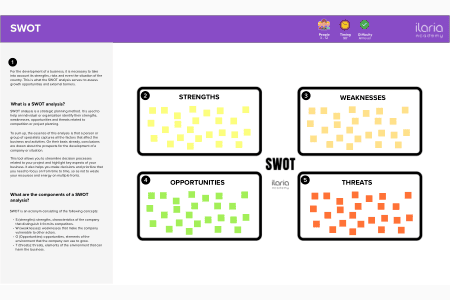
For the development of a business, it is necessary to take into account its strengths, risks and even the situation of the country. This is what the SWOT analysis serves: to assess growth opportunities and external barriers.
SWOT analysis is a strategic planning method. It is used to help an individual or organization identify their strengths, weaknesses, opportunities and threats related to competition or project planning.
To sum up, the essence of this analysis is that a person or group of specialists captures all the factors that affect the business and activities. On their basis already, conclusions are drawn about the prospects for the development of a company or situation.
This tool allows you to streamline decision processes related to your project and highlight key aspects of your business. It also helps you make decisions and prioritize that you need to focus on from time to time, so as not to waste your resources and energy on multiple fronts.
SWOT is an acronym consisting of the following concepts:
The strengths are the tangible and intangible benefits your business has. Some useful examples:
These are the areas where we find a wide margin for improvement.
These are favorable external aspects of your business that you can use to your advantage.
These are conditions beyond your control that affect your chances of success.
Nuestro asistente le orienta hacia la formación adecuada, las opciones de financiación y el nivel de acompañamiento que necesita.
Una metodología diseñada para que estés listo para el trabajo rápidamente: cursos en directo, acompañamiento personalizado, recursos en línea, IA y aplicaciones móviles al servicio de tu progreso.
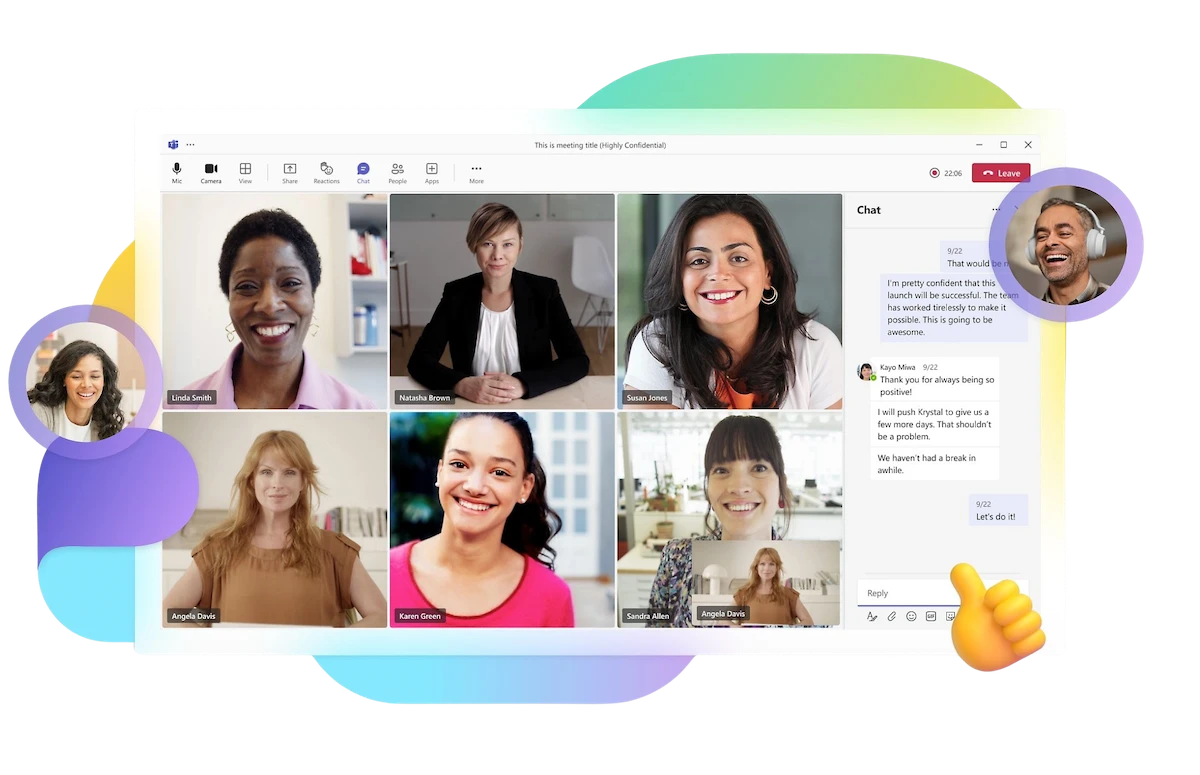
Sigue sesiones interactivas en directo con formadores y haz tus preguntas para seguir progresando. ¿No pudiste asistir? Habrá un replay disponible para no perderte nada.
Benefíciate de sesiones de coaching en grupos reducidos y de citas individuales para desbloquearte, estructurar tu proyecto y mantener el rumbo.
Trabaja en casos reales del sector digital: sitios web, campañas de marketing y proyectos emprendedores, para construir un portfolio y obtener una experiencia real.
Accede a recursos estructurados (materiales, replays, guías prácticas) y aprende a usar la IA como herramienta para ahorrar tiempo y mejorar tus competencias.
Progresa en cualquier lugar y en cualquier momento gracias a nuestras aplicaciones móviles dedicadas a cada programa (seguimiento del progreso, prácticas, recordatorios y contenidos complementarios).
Prepárate para los exámenes con simulacros, feedback detallado y acompañamiento hacia unas prácticas o un proyecto freelance para validar tus competencias.
Quieres cambiar de profesión e incorporarte al sector digital, incluso sin una base técnica. Te acompañamos paso a paso para adquirir los fundamentos, estructurar tu proyecto y apuntar a tu primer puesto.
Ya estás trabajando y quieres hacer evolucionar tu carrera, asegurar tu empleo o preparar una transición hacia un rol más digital. Aprende a tu ritmo sin interrumpir tu actividad.
Estás en formación inicial o acabas de obtener tu diploma, y quieres adquirir competencias prácticas y operativas para impulsar tu empleabilidad en el sector digital.
Vives en el extranjero y quieres seguir una formación a distancia reconocida, con la posibilidad de realizar tus exámenes en línea o en alguno de nuestros campus según tu situación.
Accede a los replays completos de nuestras promociones anteriores a un precio más accesible y progresa a tu ritmo cuando no puedas incorporarte a la próxima convocatoria.
Estas empresas contratan por las competencias que enseñamos: Accenture Luxembourg · Plus que pro · TechFirm Information Systems · YO IT Consulting · HUG - Hopitaux Universitaires de Genève · Sia · MIGSO-PCUBED · Randstad Luxembourg · Luxembourg Institute of Science and Technology (LIST) · Aubay · UST · Tata Consultancy Services · Wavestone · ARHS Group · WealthBridge Financial Group · Fujitsu · VINCI Energies · Crossing Hurdles · Haystack · Quik Hire Staffing · Twine · Astek · Air Apps · SQLI · VISEO