
Personas en búsqueda de empleo
Quieres cambiar de profesión e incorporarte al sector digital, incluso sin una base técnica. Te acompañamos paso a paso para adquirir los fundamentos, estructurar tu proyecto y apuntar a tu primer puesto.
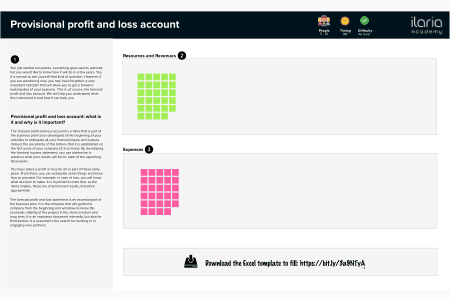
You just started a business, everything goes well as planned, but you would like to know how it will do in a few years. Yes, it is normal to ask yourself that kind of question. However, if you are wondering now, you may have forgotten a very important indicator that will allow you to get a forward-looking idea of your business. This is, of course, the forecast profit and loss account. We will help you understand what this instrument is and how it can help you.
The forecast profit and loss account is a table that is part of the business plan to be developed at the beginning of your activities to anticipate all your financial inputs and outputs. Indeed, the peculiarity of this table is that it is established on the first years of your company (3, 5 or more). By developing the forecast income statement, you can determine in advance what your results will be for each of the upcoming fiscal years.
You may realize a profit or loss for all or part of these early years. From there, you can anticipate some things and know how to proceed. For example, in case of loss, you will know what decision to make. It is important to note that, as the name implies, these are only forecast results, therefore approximate.
The forecast profit and loss statement is an essential part of the business plan. It is the compass that will guide the company from the beginning and will allow to know the economic viability of the project in the short, medium and long term. It is an important document internally, but also for third parties. It is essential in the search for funding or in engaging new partners.
Here are some tips that will help you know what to consider when making an effective profit and loss account.
The first mistake in preparing a forecast profit and loss account is being too extreme. Overly conservative forecasting may exclude interesting projects or areas of activity. Similarly, too optimistic forecasts can complicate the viability of a business. Try to be realistic in your forecasts in order to achieve the mission set out in the forecast income statement: sustainable growth of the company in the medium to long term.
Will it be carried out annually or quarterly? As a rule, if it is a new business, the forecasts should be made on a quarterly basis. For well-established businesses, it is usually sufficient to forecast revenue and expenditure once a year.
In all cases, forecasts must be made over a period of three to five years. Therefore, the forecast of losses and profits must be broken down into year 1, year 2, year 3... and should be broken down and graded quarterly or annually if necessary.
To function as an internal decision support tool, the parties to be included must reflect commercial realities. To do this, each element must be properly decomposed to be properly analyzed and interpreted. It must not be too complex to be easy to interpret, but also not to serve as an analytical function.
Nuestro asistente le orienta hacia la formación adecuada, las opciones de financiación y el nivel de acompañamiento que necesita.
Una metodología diseñada para que estés listo para el trabajo rápidamente: cursos en directo, acompañamiento personalizado, recursos en línea, IA y aplicaciones móviles al servicio de tu progreso.
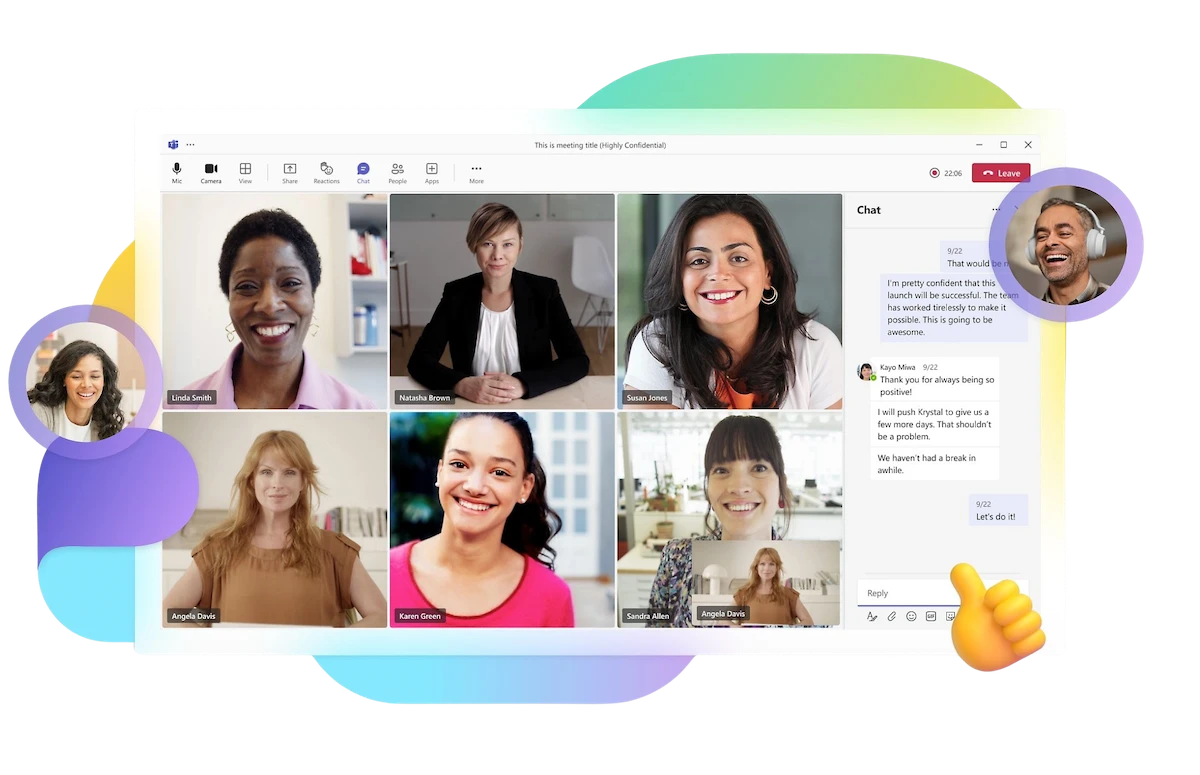
Sigue sesiones interactivas en directo con formadores y haz tus preguntas para seguir progresando. ¿No pudiste asistir? Habrá un replay disponible para no perderte nada.
Benefíciate de sesiones de coaching en grupos reducidos y de citas individuales para desbloquearte, estructurar tu proyecto y mantener el rumbo.
Trabaja en casos reales del sector digital: sitios web, campañas de marketing y proyectos emprendedores, para construir un portfolio y obtener una experiencia real.
Accede a recursos estructurados (materiales, replays, guías prácticas) y aprende a usar la IA como herramienta para ahorrar tiempo y mejorar tus competencias.
Progresa en cualquier lugar y en cualquier momento gracias a nuestras aplicaciones móviles dedicadas a cada programa (seguimiento del progreso, prácticas, recordatorios y contenidos complementarios).
Prepárate para los exámenes con simulacros, feedback detallado y acompañamiento hacia unas prácticas o un proyecto freelance para validar tus competencias.
Quieres cambiar de profesión e incorporarte al sector digital, incluso sin una base técnica. Te acompañamos paso a paso para adquirir los fundamentos, estructurar tu proyecto y apuntar a tu primer puesto.
Ya estás trabajando y quieres hacer evolucionar tu carrera, asegurar tu empleo o preparar una transición hacia un rol más digital. Aprende a tu ritmo sin interrumpir tu actividad.
Estás en formación inicial o acabas de obtener tu diploma, y quieres adquirir competencias prácticas y operativas para impulsar tu empleabilidad en el sector digital.
Vives en el extranjero y quieres seguir una formación a distancia reconocida, con la posibilidad de realizar tus exámenes en línea o en alguno de nuestros campus según tu situación.
Accede a los replays completos de nuestras promociones anteriores a un precio más accesible y progresa a tu ritmo cuando no puedas incorporarte a la próxima convocatoria.
Estas empresas contratan por las competencias que enseñamos: Klanik · ARHS Group · Capital One · EFG International · Twine · Airbus Defence and Space · SES Satellites · FINAXYS · Extia · Aubay · Capgemini · Swissquote · Amazon Web Services (AWS) · Hire Feed · Sundayy · TotalEnergies · YO IT Consulting · RoviSys · GROUPE LR TECHNOLOGIES · Thales · STEP UP · Haystack · EUROP-IT Services · Keyrus · Accenture France